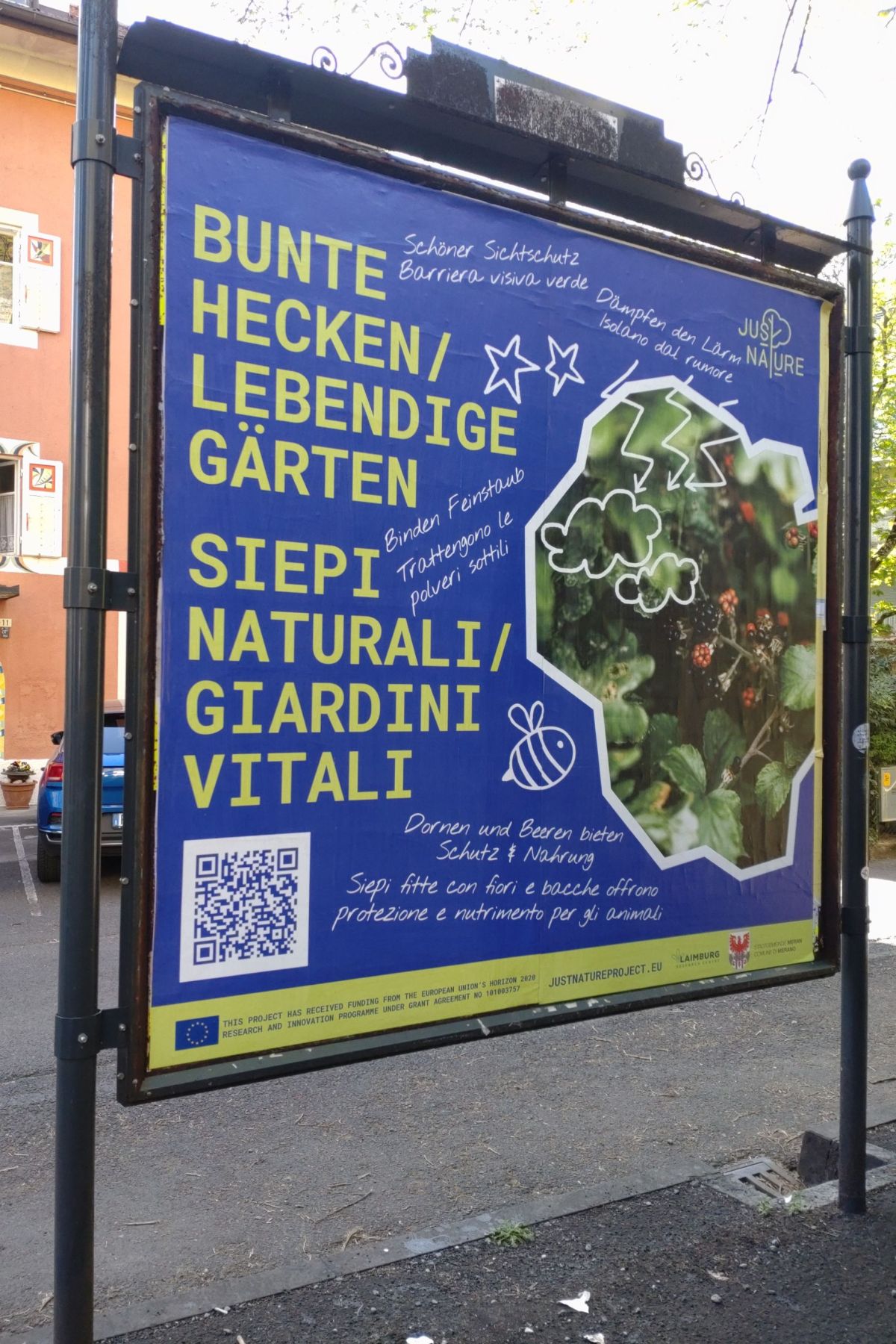
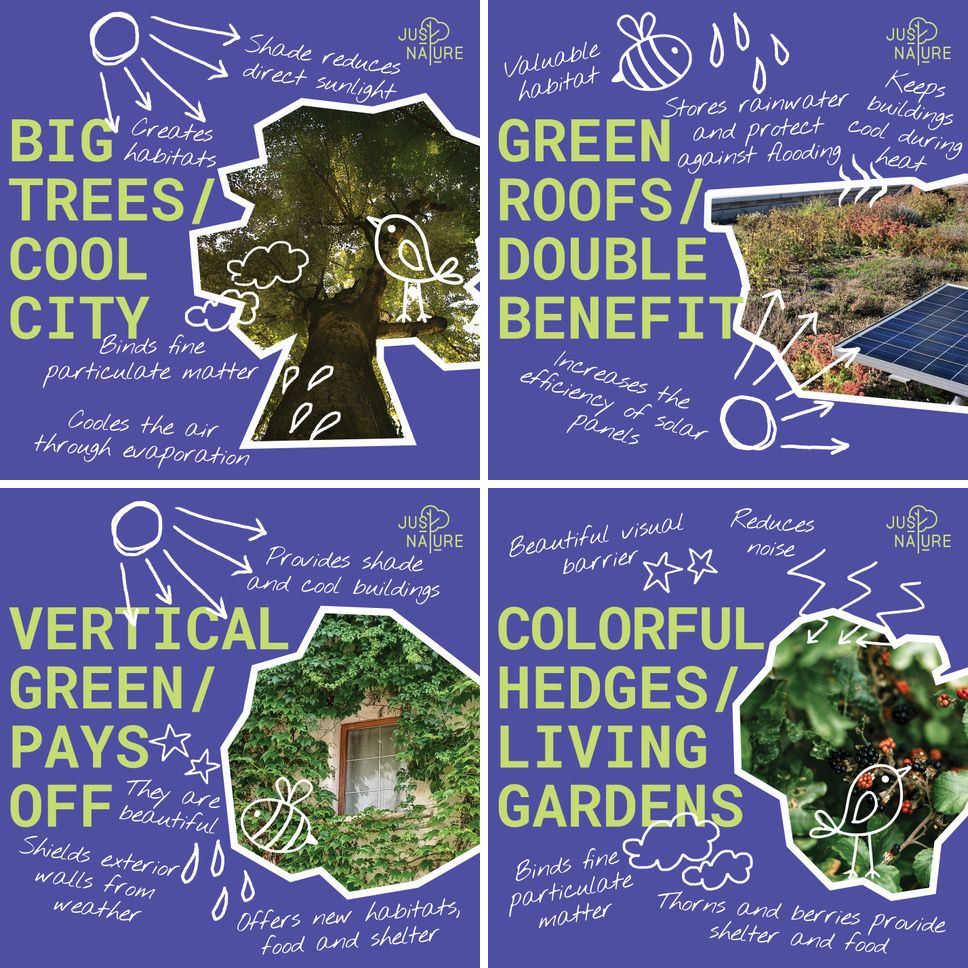
Merano's municipal administration, which recently won the “Città del Verde 2026” award – also thanks to the JUSTNature project – is inviting residents to help make the city even greener and more colourful. In April, a large-scale poster campaign was launched to raise public awareness about nature-friendly design of private open spaces in support of greater biodiversity. A free practical guide is also available.
The initiative puts a final mark on the JUSTNature project inviting residents to help make the city even greener.
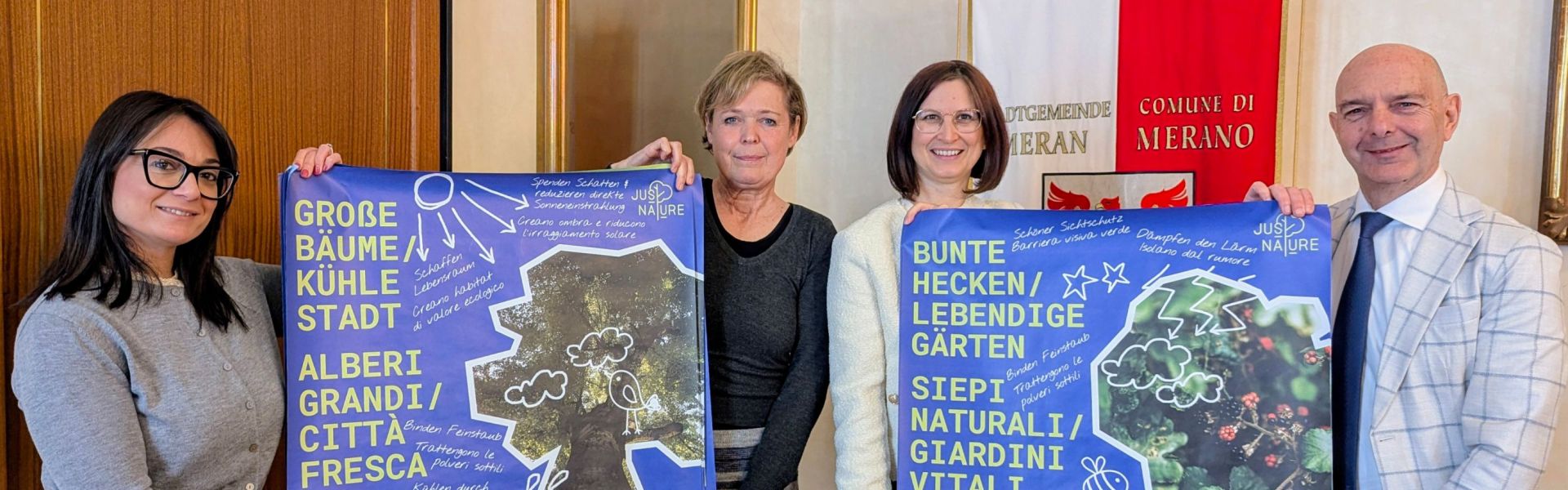
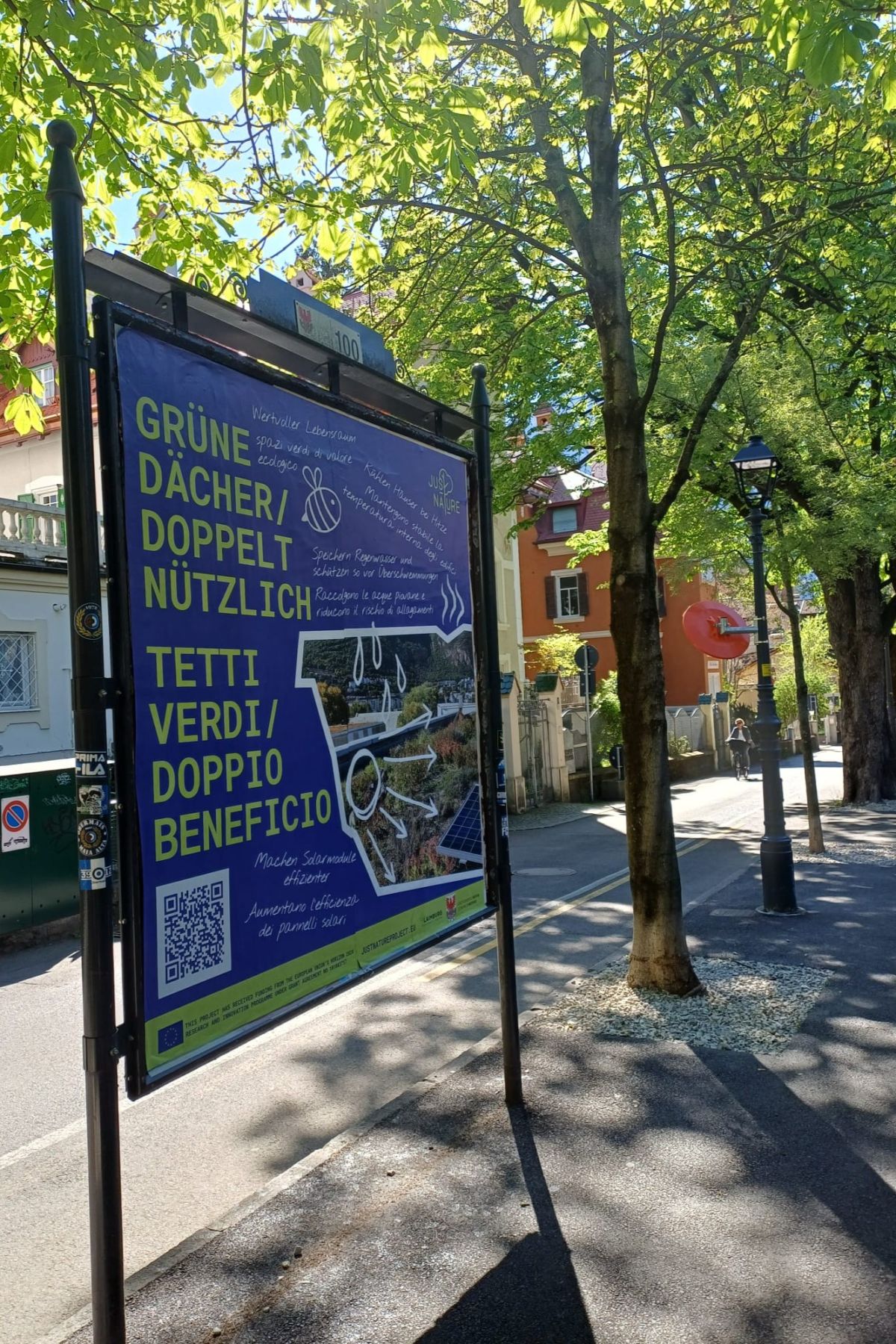
“Biodiversity is crucial for a liveable future. The diversity of plants, animals and micro-organisms, as well as the variety of their habitats, forms a fundamental basis for stable ecosystems. Healthy, species-rich green spaces clean the air, store CO₂, improve the urban climate and demonstrably promote both physical and mental well-being among the population. In Merano, protecting biodiversity not only supports ecological balance, but also makes a significant contribution to the quality of life in a growing spa town shaped by the interaction between nature, people and the urban environment. With the poster campaign, we aim to raise awareness of nature-oriented design on private land. The initiative is intended as an accessible reminder that everyone can positively influence our future within their own means. Many small actions – an insect-friendly garden, a flowering balcony, avoiding pesticides or protecting an old tree – together create a significant impact,” emphasises Councillor for the Environment Antonella Costanzo.
Alongside the poster campaign, a practical guide has been prepared in collaboration with Laimburg. Developed in the context of the JUSTNature project, it is available both digitally and in print, and can also be accessed directly via the QR code printed on the posters. Its aim is to support residents in easily incorporating species protection into their daily lives and turning private green spaces into valuable habitats.
“In Merano, there are around 8,000 public trees that shape the cityscape and play key roles in the microclimate. Even more remarkable, however, is the large number of trees in private gardens and courtyards: there are no fewer than 38,000. These private trees are an essential part of urban biodiversity – they connect habitats, provide shade, cool streets and offer food and shelter to countless animal species,” explains Costanzo. “Their care and protection are therefore just as important as the management of public trees. Only when public and private tree structures work together can a functioning green network emerge, making the city more resilient to heat, drought and extreme weather events. Older trees in particular, whether public or private, make an invaluable contribution: their cooling effect, CO₂ storage capacity and ecological value cannot be replaced in the short term by new plantings,” she adds.
“The poster campaign also serves as the concluding initiative of the EU-funded JUSTNature project. Within this project, several innovative measures were implemented. Among other things, a neglected green space on Winkelweg was transformed into a demonstration garden featuring drought-resistant shrubs, a wildflower meadow, public raised beds and a cooling oasis. In addition, all large trees in the city were digitally recorded and temperature sensors were installed across the entire urban area, allowing potential heat islands to be monitored in real time. Several guidelines on greenery and biodiversity were also developed,” explains engineer Ruth Lochmann, who, together with landscape architect Andrea Balestrini, provided technical support to the City of Merano as part of the JUSTNature project.
“The City of Merano has also taken on a pioneering role by requiring a minimum number of so-called ‘Nature Based Solutions’ in construction projects. Depending on the size and location of the site, a minimum score for ecological functionality is defined, which each proposed project must achieve. This requirement ensures that planners must consider a range of measures already at the design stage, such as planting tall trees and species-rich hedges, creating green roofs – also in combination with photovoltaic systems – and vertical greening of bare building walls (an ideal solution in densely built-up areas where space for greenery is limited). As part of the JUSTNature project, guidelines were developed for this purpose, and the concept has attracted considerable interest from cities both nationally and internationally,” emphasises Anni Schwarz from the Department of Green Spaces and the Environment, who coordinated the ecological functionality index developed by biologist Mauro Tomasi.
Heat stress caused by climate change, together with the intensively farmed agricultural land surrounding Merano – often structurally poor and offering little valuable habitat for flora and fauna – poses a major challenge for local ecosystems. This makes green corridors, wild areas and native, species-rich planting within residential zones all the more important. It is precisely here that individuals can make a difference in their own gardens and on their balconies. To ensure that Merano remains a liveable city for people, large trees are of particular importance. Nothing can replace the value and cooling effect of a mature tree in summer. The care and preservation of every large tree is essential, and many residents make a significant contribution in this regard, helping to make their city more beautiful and liveable.
//
You can read this news article in it original version (in German) here.
Header Photo: Stadtgemeinde Meran